
How Much Does It Cost to Build a Tutoring Website?

TL;DR: Tutoring Website Development Cost
- Tutoring website development can cost around $1000 to $150,000+, depending on whether you choose ready-made software, custom development, or an enterprise solution.
- Major cost drivers include scheduling, payments, video conferencing, AI features, mobile apps, integrations, security, and scalability requirements.
- Ready-made tutoring software is usually the fastest and most affordable option for startups and businesses that want to launch quickly.
- Custom development offers more flexibility, but it requires a larger budget, longer development time, and higher ongoing maintenance costs.
- Ongoing expenses such as hosting, maintenance, marketing, video services, and third-party APIs should also be included in the overall budget.
Online tutoring has become a convenient way for students to connect with tutors and learn from anywhere. This growing demand has also created opportunities for educators, coaching institutes, and entrepreneurs to launch their own tutoring platforms.
But how much does it cost to build a tutoring website? The answer depends on factors such as the features you need, level of customization, integrations, and development approach.
In this guide, we’ll break down the cost of building a tutoring website, the key factors that influence development costs, available development approaches, and ongoing expenses to consider.
Is Building a Tutoring Website Worth the Investment?
The online tutoring market is growing as learners increasingly look for flexible and personalized ways to develop academic, professional, and technical skills. This creates opportunities for businesses to build tutoring marketplaces that connect learners with tutors across different subjects and learning formats.
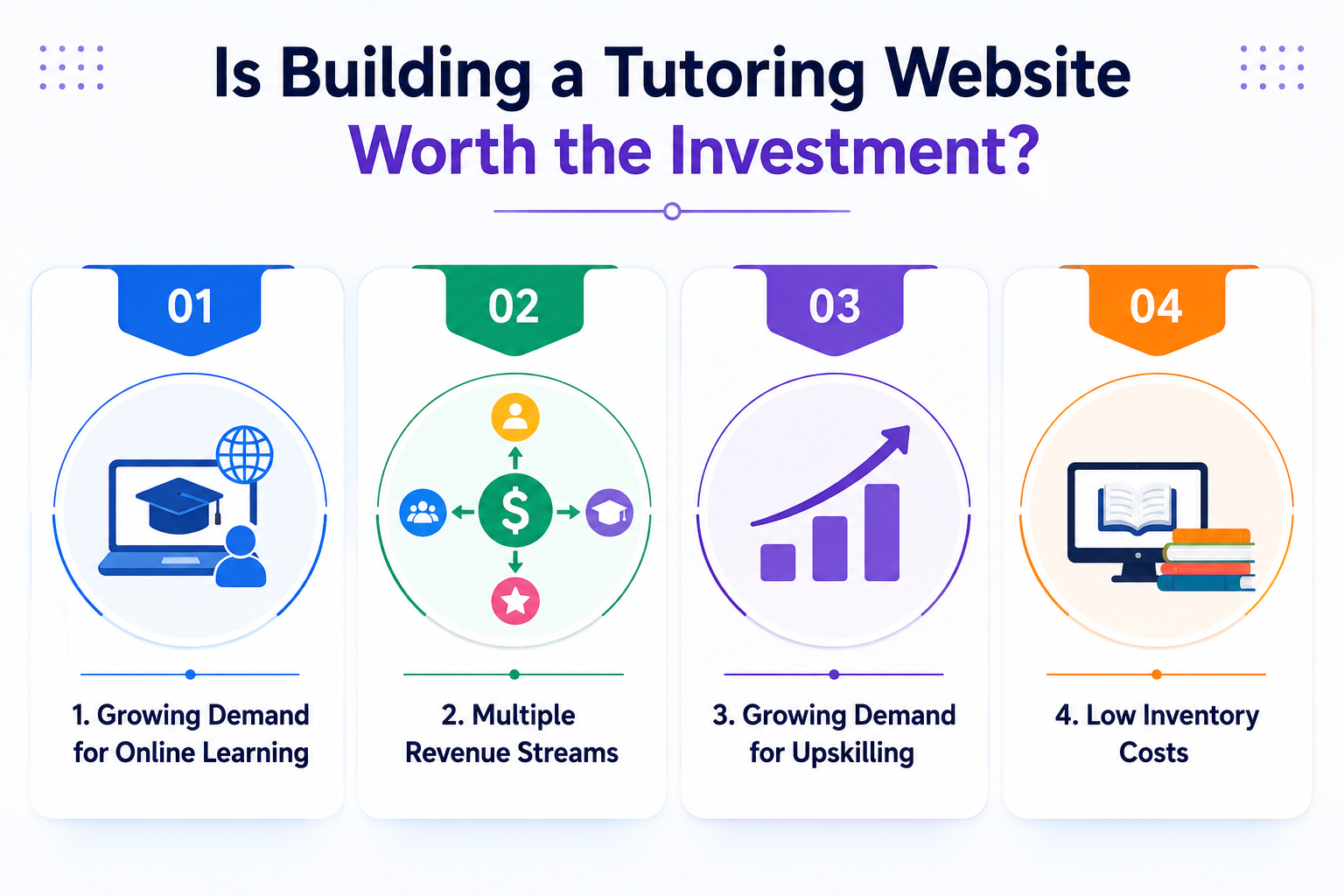
Here are some key reasons why investing in a tutoring marketplace can be worthwhile:
1. Growing Demand for Online Learning
Online learning allows students and professionals to access tutors and learning resources without being limited by location or fixed classroom schedules. A tutoring marketplace can meet this demand by bringing multiple tutors, subjects, and learning options together on a single platform.
This model also allows learners to compare tutor profiles, availability, pricing, and areas of expertise before choosing a session or course.
2. Multiple Revenue Streams
A tutoring marketplace can generate revenue through multiple sources instead of relying on a single monetization model. Common options include:
- Subscriptions: Offer premium plans for students or tutors with additional features and benefits.
- One-on-One Sessions: Earn commissions or platform fees from individual tutoring sessions.
- Course Sales: Allow tutors to create and sell self-paced courses and learning materials.
- Featured Listings: Charge tutors to promote their profiles or courses for greater visibility.
- Group Classes: Generate revenue from live classes where multiple students can learn together.
Having multiple revenue streams allows the marketplace to serve different learning preferences while creating additional opportunities for business growth.
3. Growing Demand for Upskilling
The rapid adoption of AI and other emerging technologies is changing the skills required across industries. According to the World Economic Forum, 39% of workers‘ existing skill sets are expected to change by 2030, while 85% of employers plan to prioritize workforce upskilling. AI and big data are also among the fastest-growing skills in demand.
This creates an opportunity for tutoring marketplaces to expand beyond traditional academic subjects and offer learning in areas such as AI, programming, cybersecurity, business, languages, and other in-demand skills.
4. Low Inventory Costs
A tutoring marketplace primarily delivers digital learning experiences, so businesses do not need to maintain physical classrooms or large inventories of printed educational materials.
Tutors can create courses, study resources, and other learning content based on their areas of expertise and offer them through the marketplace. As more tutors join the platform, businesses can expand their course and subject offerings without having to create every piece of content themselves.
This makes it easier to expand the marketplace while keeping inventory-related costs relatively low.
How Much Does It Cost to Build a Tutoring Website?
The cost to build a tutoring website depends on your business requirements, feature complexity, customization needs, and the development approach you choose.
- Ready-Made Tutoring Software ($699-$10,000): Best for startups and businesses looking for a faster, cost-effective launch. It includes essential features such as tutor management, scheduling, payments, virtual classrooms, and admin controls, with options for customization.
- Custom Tutoring Website ($15,000-$50,000+): Suitable for businesses that need unique workflows, custom UI/UX, advanced learning features, third-party integrations, and greater flexibility than off-the-shelf software can provide.
- Enterprise Tutoring Marketplace ($50,000-$150,000+): Designed for large-scale platforms with multiple tutors, AI-powered features, mobile apps, automated payouts, and enterprise-level scalability.
Factors Affecting Tutoring Website Development Cost
The total cost to build a tutoring website depends on several factors, including your business model, platform complexity, target audience, and long-term scalability goals. Understanding these cost drivers helps you plan your budget and prioritize the features that deliver the most value.
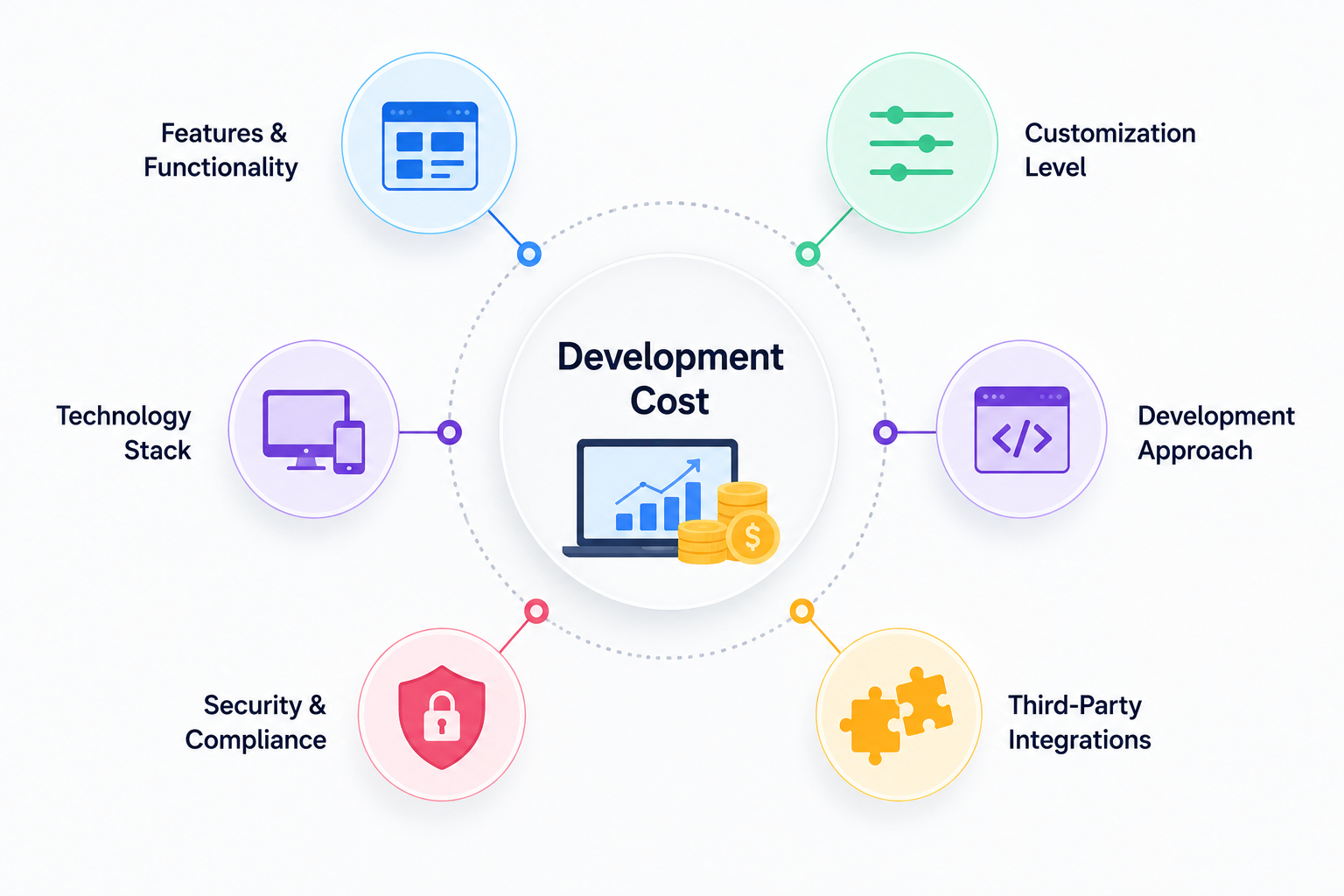
- Business Model: A platform for individual tutors costs significantly less than a multi-tutor marketplace with separate dashboards, commissions, and tutor management features.
- Platform Features: The number and complexity of features directly impact development costs. Video conferencing, scheduling, payment processing, AI tools, and student progress tracking require additional development and integrations.
- Development Approach: Your choice between a ready-made solution, custom development, or a no-code platform has the biggest impact on both cost and launch time.
- Scalability Requirements: Platforms designed to support thousands of users, multiple tutors, and international expansion require more robust infrastructure, increasing development and operational costs.
- Third-Party Integrations: Integrating services such as Zoom, Stripe, Google Calendar, email notifications, and analytics tools can increase the overall development budget.
- Security and Compliance: Encrypted data transmission, secure authentication, role-based access controls, payment security, regular backups, and compliance with privacy regulations such as GDPR or FERPA, where applicable, can add to development and ongoing maintenance costs.
- Mobile Responsiveness and App Development: A responsive website that works smoothly across smartphones, tablets, and desktops may require additional design and testing. Developing dedicated Android and iOS apps further increases development and maintenance costs.
- UI/UX Design and Branding: Custom UI/UX design, branded interfaces, landing pages, dashboards, and consistent visual elements require additional design work and can increase the overall development cost.
Key Features That Affect Online Tutoring Website Cost
A tutoring website can start with essential tools for managing tutors, students, bookings, and payments. Features such as live classes, AI tutoring, mobile apps, and advanced tutor matching add more functionality and can increase the development investment.
Choosing the right features based on your business model and target audience can help you control development costs while ensuring your platform meets users’ needs.
1. User Management and Profiles
- Every tutoring platform needs dedicated dashboards for students, tutors, and administrators. Core functionalities include user registration, profile management, tutor verification, ratings, account settings, and role-based access. As the platform grows, these systems become more complex and require additional backend development.
- Estimated Cost: $2,000-$5,000
2. Booking and Scheduling
- An online tutoring website should allow students to browse tutor availability, book sessions, receive automated reminders, and manage appointments across different time zones. Integrating calendar synchronization and scheduling automation increases development complexity.
- Estimated Cost: $3,000-$8,000
3. Payment Processing
- Secure payment processing is essential for handling subscriptions, one-time lesson bookings, tutor payouts, refunds, invoicing, and support for multiple payment gateways. The overall development cost depends on the payment providers, payout workflows, and billing models you support.
- Estimated Cost: $3,000-$7,000 (plus payment gateway transaction fees)
4. Messaging and Communication
- Built-in messaging enables tutors and students to communicate directly through the platform without relying on third-party applications. Features such as chat history, notifications, attachments, and real-time messaging add to the development effort.
- Estimated Cost: $2,000-$4,000
5. Analytics and Reporting
- Analytics dashboards help administrators monitor platform performance while allowing tutors and students to track sessions, earnings, learner progress, and engagement. More advanced reporting features require additional development.
- Estimated Cost: $2,000-$5,000
6. Video Conferencing
- Conducting live online classes is one of the core features of a tutoring platform. Integrating video conferencing, screen sharing, virtual whiteboards, session recording, and interactive classroom tools requires additional development and may also involve third-party licensing costs.
- Estimated Cost: $2,000-$5,000 (plus third-party licensing fees, if applicable)
7. Progress Tracking and Homework Management
- Progress tracking allows tutors to assign homework, review submissions, monitor learner performance, maintain attendance records, and generate progress reports. These features improve the overall learning experience but require dedicated workflows and database management.
- Estimated Cost: $4,000-$8,000
8. Course and Content Management
- Course and content management features allow tutors or administrators to create, organize, update, and manage learning materials. This can include video lessons, study resources, assignments, quizzes, and course categories. The cost increases when advanced content management workflows or multiple content formats are required.
- Estimated Cost: $3,000-$7,000
9. Reviews and Ratings
- Reviews and ratings allow students to share feedback about tutors and their learning experience. Features such as tutor ratings, written reviews, moderation, and review management help build trust and transparency on the platform.
- Estimated Cost: $2,000-$4,000
10. Notifications and Alerts
- Notifications keep students and tutors informed about bookings, upcoming sessions, payments, homework, messages, and other important activities. Email, SMS, and push notifications can be integrated based on the platform’s requirements.
- Estimated Cost: $2,000-$5,000
11. Mobile Applications
- Developing native Android and iOS applications requires additional design, development, testing, and maintenance beyond the web platform. Businesses may reduce costs by using cross-platform frameworks, but mobile development still represents a significant investment.
- Estimated Cost: $15,000-$40,000
12. AI-Powered Tutoring Features
- AI-powered capabilities such as personalized learning recommendations, AI tutoring assistants, automated assessments, homework assistance, and intelligent learning paths improve user engagement but require AI integrations and ongoing API usage costs.
- Estimated Cost: $5,000-$20,000 (plus AI API usage costs)
13. Certification and Gamification
- Certificates, achievement badges, leaderboards, rewards, and milestone tracking encourage learner engagement and course completion. While these features enhance the user experience, they are generally considered secondary for an MVP.
- Estimated Cost: $2,000-$5,000
14. Advanced Search and Tutor Matching
- Advanced search filters and intelligent matching algorithms help students find tutors based on subject expertise, availability, pricing, ratings, teaching style, language, and experience. These recommendation systems require more sophisticated backend logic and data processing.
- Estimated Cost: $2,000-$5,000
Tutoring Website Cost Based on Development Approach
The development approach you choose significantly affects your tutoring website development cost, launch timeline, and customization options. Whether you choose custom development, ready-made software, or a no-code solution depends on your business goals, budget, and how quickly you want to launch.
1. Ready-Made Tutoring Software
Ready-made tutoring software includes essential features such as tutor management, scheduling, secure payments, messaging, video conferencing, and admin dashboards. Solutions like Pinlearn provide these core features out of the box, allowing businesses to customize the platform based on their branding and business requirements instead of developing every module individually. This helps reduce both development time and upfront costs.
- Estimated Cost: $700-$10,000 (depending on the software, customization, and integrations)
- Timeline: 1-4 weeks
- Best Suited For: Startups, educators, coaching institutes, and businesses looking for a faster and more cost-effective launch.
2. Custom Tutoring Website
Custom development involves building the tutoring platform from scratch based on your specific business requirements. This approach is suitable when you need unique workflows, custom UI/UX, advanced learning features, specialized tutor-matching logic, or integrations that ready-made software cannot support. It provides greater control over the platform’s functionality, design, and future development but requires more time and investment.
- Estimated Cost: $15,000-$50,000+
- Timeline: 4-12 months
- Best Suited For: Businesses that need a highly customized tutoring platform with specific workflows, advanced features, and greater control over the product.
3. No-Code Website Builders
No-code website builders allow users to create tutoring websites using drag-and-drop tools with little or no programming knowledge. Platforms such as Bubble, Webflow, or Shopify with tutoring plugins are suitable for launching an MVP or a small tutoring business. However, they may offer limited flexibility when adding advanced tutoring features or scaling the platform.
- Estimated Cost: $500-$5,000
- Timeline: 2-4 weeks
- Best Suited For: Individual tutors, small coaching centers, and entrepreneurs validating a business idea.
Ongoing Costs of Running a Tutoring Website
Building a tutoring website involves more than the initial development cost. Businesses should also plan for ongoing operational expenses to keep the platform secure, reliable, and scalable.
The overall online tutoring website cost after launch depends on factors such as user activity, hosting infrastructure, third-party services, maintenance, and marketing efforts.
| Cost Component | Estimated Cost |
| Domain Name | $10-$50+ |
| Cloud Hosting | $50-$500+ |
| Database & Storage | $50-$300+ |
| Video Conferencing Services | $50-$500+ |
| Payment Gateway Fees | 2-3% per transaction |
| Email & Notifications | $10-$200+ |
| Security & SSL | $50-$500+ |
| Platform Maintenance | $1500-$3,000+ |
| Marketing & SEO | $500-$5,000+ |
| AI API & Inference Fees | $100-$1,500+ |
Note: Some services, such as domain registration and SSL certificates, are typically billed annually, while most infrastructure, hosting, maintenance, and third-party services follow a monthly billing model.
Actual operating costs vary depending on the number of tutors and students, video sessions, storage usage, third-party integrations, and platform growth.
How to Reduce Tutoring Website Development Costs?
The tutoring website development cost can be optimized without compromising essential functionality by choosing the right development strategy and prioritizing core features.
Ways to reduce development costs:
- Start with an MVP: Launch with essential features and add advanced functionality as your platform grows.
- Choose a Ready-Made Solution: Using pre-built tutoring software instead of custom development can significantly reduce both development time and upfront investment.
- Prioritize Core Features: Focus on tutor management, scheduling, payments, messaging, and video classes before adding advanced features like AI or gamification.
- Use Third-Party Integrations: Integrate services for payments, video conferencing, and notifications instead of developing them from scratch.
- Scale Infrastructure Gradually: Upgrade hosting and cloud resources based on actual user growth instead of overinvesting initially.
- Plan for Future Expansion: Build a scalable platform that allows new features to be added without major redevelopment.
Choosing the right development approach early can help businesses launch faster, control costs, and invest in additional features as their tutoring platform grows.
Final Thoughts
Building a tutoring website is not just about estimating development costs, it’s about choosing the right solution that aligns with your budget, business goals, and future growth plans. Whether you start with a basic tutoring platform or a large-scale marketplace, understanding the factors that influence development and operational costs will help you plan your investment more effectively.
Businesses looking to reduce development time and upfront costs can also consider ready-made tutoring software. Tutoring marketplace software such as Pinlearn provide essential tutoring features that can be customized to support different tutoring business models, allowing businesses to launch faster while retaining the flexibility to scale as they grow.
FAQ Related to How Much Does It Cost to Build a Tutoring Website?
1. Should I choose custom development or a ready-made tutoring platform?
Ready-made platforms help businesses launch faster with lower upfront costs, while custom development offers greater flexibility but requires more time and investment. The right choice depends on your budget and long-term goals.
2. How long does it take to build a tutoring website?
A ready-made tutoring platform can typically be launched within 2-4 weeks, while custom development may take 3-8 months or longer. The timeline depends on the platform’s features, integrations, UI/UX requirements, customization, and development approach.
3. What features increase the cost of a tutoring website?
Features such as live video classes, AI-powered tutoring, real-time chat, payment integration, advanced dashboards, scheduling, multilingual support, and custom analytics can increase development costs. The complexity of these features and integrations also affects the overall development and maintenance requirements.