How to Build a Website Like Wyzant: A Practical Guide for Entrepreneurs
TL;DR
- Wyzant is a peer-to-peer online tutoring marketplace helping learners to discover subject or skill-specific tutors.
- Top features include login & account setup, verification, tutor search, live tutoring, secure payments, payout, ratings, and reviews.
- STEM tutoring, test preparation, technology, and specialized tutoring are the profitable niches for starting a similar tutoring platform.
- The cost of building a Wyzant-like website from scratch comes around $25,000 – $120,000+, depending on feature complexity.
- Entrepreneurs can use a pre-built script to launch a tutoring platform like Wyzant within 6-7 business days, rather than months.
Wyzant’s success story has been impressive, scaling from 2005 college campus roots to a leading US-based online tutoring platform with over 65,000+ tutors and 3 million lessons delivered. Today, the platform competes with industry leaders like Preply, Varsity Tutors, and Tutor.com, connecting learners with expert tutors.
If you’re building a similar tutoring platform, strategic planning and niche specialization are crucial for success. In this blog, you’ll learn how to create a website like Wyzant, the core feature set, the developmental cost, the tech stack, and the best development approaches.
How Does Wyzant Work?
Wyzant is an online tutoring marketplace, connecting learners with independent tutors. Students book lessons for specific subjects and take classes. Tutors create their profiles, set prices, list their availability, and get paid per completed session. It operates on a commission-based model, where the platform deducts 25% as a commission, and tutors earn a fixed 75% share of the revenue.
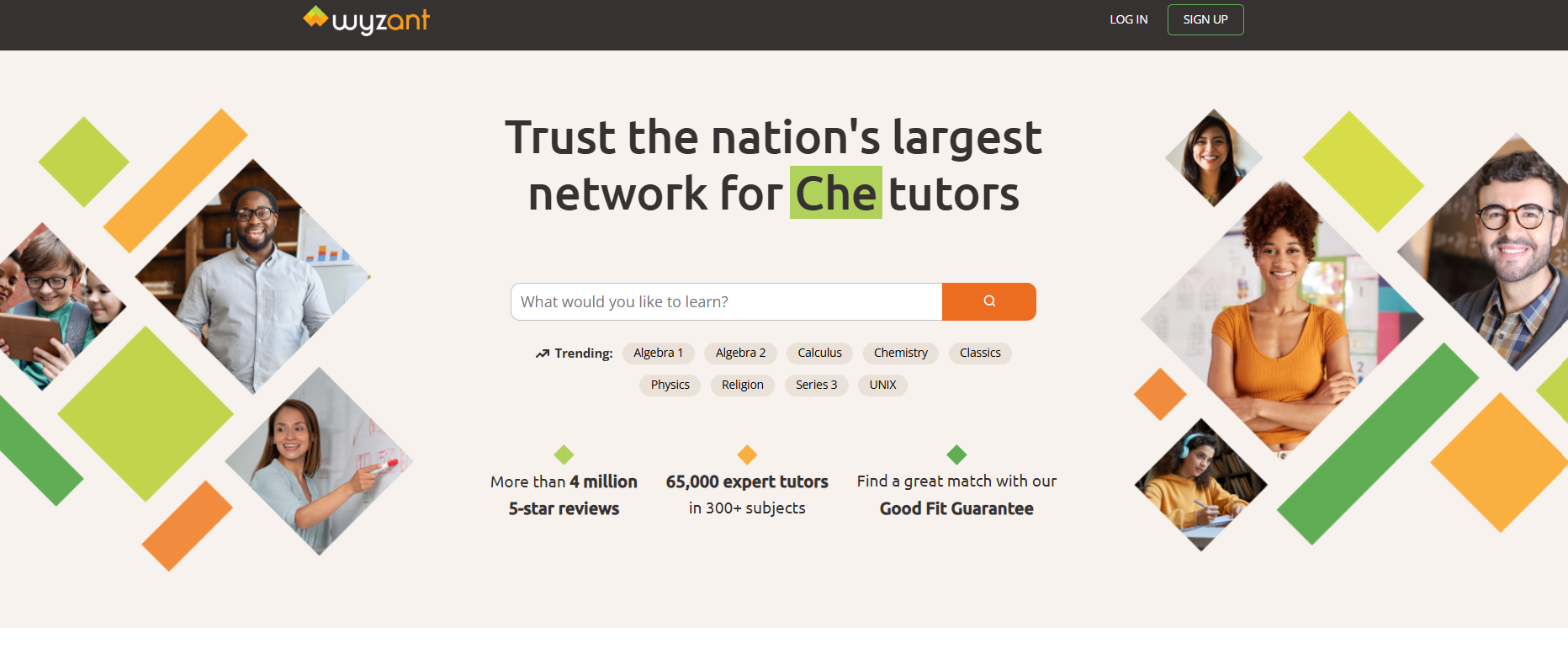
Here are key aspects of Wyzant’s business model:
- Peer-to-Peer Tutoring Marketplace – Unlike traditional tutoring agencies, peer-to-peer tutoring marketplaces connect independent tutors directly to learners.
- Integrated Virtual Classroom – Tutors can either use Wyzant Learning Studio or Zoom for tutoring sessions.
- Pay-as-you-go Tutoring Model – Tutors set their prices based on hourly rates, subject demand, or expertise.
- Trust and Reputation Systems – Wyzant ensures credibility with ratings and reviews, verified tutor profiles, and secure payments.
This reliable business model works to balance the tutor supply and demand, while ensuring smooth platform operations.
Must-Have Features for a Website Like Wyzant
Let’s navigate through the key features for creating a website like Wyzant!
- Login & Profile Setup – Set up a simple registration process and social login for students and tutors. Tutors can manage their bio, intro video, pricing, and subject categories from their profile.
- Tutor Search & Discovery – Students can discover subject experts and filter by language, pricing, category, etc.
- Tutorial Approval & Verification – New tutors need to complete identity verification and a background check to start tutoring.
- Scheduling & Tutor Availability – Students can book trial or paid sessions based on tutor availability and time zones settings.
- Live Tutoring – Integrate video conferencing tools like Zoom or LessonSpace for private or group tutoring.
- Secure Payments – Stripe and PayPal integrations Description, revenue split logic, and refund handling together make a robust payment setup.
- Tutor Dashboard – A comprehensive dashboard helps tutors to manage bookings, host live sessions, and communicate.
- Payout & Escrow Logic – Tutors can initiate payouts based on sessions completed, and the platform holds money until the session is over.
- Admin Panel & Analytics – Admin panel helps to manage revenue, active tutors, students, payments, and bookings.
- Ratings & Reviews – Students can review tutors and share their learning experience as comments.
How to Build a Website Like Wyzant: 9 Essential Steps
Building a tutoring marketplace like Wyzant is all about setting up an entire ecosystem of tutors and students. From managing tutor availability to secure payments and trust systems, you need a clear strategic plan to scale your platform.
Here are the key developmental steps for building a website like Wyzant:
Step 1: Identify a Profitable Niche
Niche selection is one of the most important steps for your tutoring marketplace. Choosing a narrow niche helps to focus on a specific target market. Thus, you can tailor your business model, platform features and marketing efforts in that direction.
Top tutoring niches to scale your Wyzant-like marketplace:
- STEM Tutoring – Includes high-demand subjects like science, math, and coding from K-12 to university students.
- Test Preparation Services – Preparatory coaching sessions for SAT, GMAT, ACT, GRE and LSAT.
- Specialized Tutoring – Tutoring to improve professional skills, such as public speaking, writing, design, and marketing.
- Language Learning – Focuses on language tutoring for English, Spanish, French, and Mandarin, covering speaking skills, grammar, and pronunciation.
- Coding & Tech Skills – Training sessions for Python, AI, machine learning, web development, etc.
- Special Needs – Reading and learning support for ADHD, dyslexia, and other special needs students.
- Creative Classes – Includes skills tutoring for music, arts, photography, illustration, etc.
- Other categories – Based on demographics (age, location, language), curriculum services (one-on-one, group, hybrid).
Niche Selection Steps:
- Perform market research & trend analysis.
- Analyze top competitors: features, pricing strategy, marketing, platform reviews.
- Assess market gaps and ensure your niche has sufficient demand.
Step 2: Understand Your Target Audience
Does your platform focus on K-12 students, high schoolers, university learners or career professionals? Each audience segment has unique goals, expectations and pain points.
To get started, identify sub-groups within your audience. Consider the demographics, behavior, geographic, and psychographic factors of your target market.
Ask these key questions:
- Which age group do learners belong to? (e.g., school learners, professionals, college students)
- Why would they use your tutoring services? (e.g., upskilling, learning assistance, exam preparation)
- How much are they willing to pay for tutoring sessions?
- Which learning format and mode do they prefer? (e.g., self-paced, 1-on-1, group classes, hybrid model)
- What are their expectations and current challenges they are facing?
Methods for Researching the Target Market:
- Interview and conduct surveys on potential audiences.
- Analyze audience pain points across communities such as subreddits, Quora, and Facebook groups.
- Use tools like Google Trends, Semrush, and Ahrefs to spot user queries and trends.
- Analyze search trends on LLMs, AlsoAsked and AnswerThePublic.
Step 3: Choose the Right Business Model
Your business model decides your revenue streams and long-term stability. It dictates everything from features, workflows, to even promotional strategy.
Common tutoring business models are:
| Business Models | Description |
| Commission-based Model (Popular) | Wyzant and Preply operate on this model. Both platforms take a standard commission percentage on transactions. Wyzant charges tutors a flat 25% commission on all lessons.
Example: If a tutor charges $100 for a lesson, Wyzant takes $25 and the tutor earns $75. Why It Works?: Revenue growth with more users and offers equitable revenue share |
| Pay-per-session | Students pay for individual booked sessions.
Why It Works?: Flexible, no long-term commitment for students and easy to manage |
| Subscription Model | Students pay a monthly fee for platform access, number of lessons, or premium tutors.
Why It Works?: Predictable revenue, lower acquisition cost, learning continuity |
| Lesson Packages | Students pay a discounted price for lesson bundles, rather than individual sessions.
Why It Works?: Attractive discounts, reduces churn, and long-term earnings. |
| Corporate Tutoring | Training sessions and tailored courses for employees and businesses.
Why It Works? Premium pricing, less competition, and ongoing revenue. |
Step 4: Design the UX & Core Features
Aim for a user-centric interface design, focusing on simple navigation, easy discovery, and intuitive dashboards to increase retention, conversion, and platform growth.
Key design pillars include:
- Simple Onboarding Flows – Most tutoring platforms struggle with onboarding. Design separate tutor and student onboarding flows. For example, tutors need guidance to set up live classes, track student engagement, and ensure tutor availability during onboarding.
- Tutor Discovery – For enhanced tutor discovery, include bio, ratings, price, tutor hours, and tutor availability in the search results.
- Mobile-Responsive UX – The majority of users access through smartphones and tablets. Include micro-interactions like instant feedback and next steps for easy access.
- Dashboard – Ensure the dashboard is tailored to user goals and key metrics, and includes different analytics tools.
- Gamification – Include streaks, badges, and progress bars for motivating and engaging learners.
Step 5: Custom Development vs. Ready-made Clone Scripts
Choosing your development approach is one of the fundamental steps in this “how to create a website like Wyzant” guide.
You have two ways to build Wyzant: Custom development and a ready-made tutoring marketplace clone script like Pinlearn (recommended).
| Comparison Aspect | Ideal For | Launch Time | Cost | Technical Expertise | Customization | Scalability |
| Custom Development (Building from Scratch) | Businesses with unique requirements | 4 -12 months | Expensive
($25,000 to $120,000+) |
Skilled development team required | High | High |
| Ready-made Tutoring Marketplace Clone Scripts | Entrepreneurs & startups | Within 6-7 days | Affordable ($700 – $1500) | No technical expertise needed | High | High |
How do ready-made tutoring marketplace clone scripts work?
- Choose a pricing plan (base or professional pack).
- Finalize your monetization model, branding, and customizations (add-ons)
- Deploy your platform on your server
- Launch and scale as your business grows
- Ongoing support and maintenance updates
Step 6: Set up Secure Payment
Setting up secure payment flows builds trust and ensures compliance. It is one of the first signals that your platform is a reliable entity and attracts quality tutors and the right students.
A secure payment flow involves:
- Secure Payments – Integrate widely trusted payment providers, such as Stripe and PayPal, supporting PCI compliance and currency support.
- Payment Model – A one-size approach doesn’t work for all. Provide tutors with options to set prices on hourly rates, lesson packages, subscriptions, etc.
- Escrow System – Once the learner makes a payment, the funds are held in an escrow account until the tutor completes the session. This ensures structured scheduling and reduces no-shows and disputes.
- Compliance – Ensure compliance with GDPR in Europe, and CCPA in the US, with responsible data handling and copyright protection.
Step 7: Onboarding High-Quality Tutors & Trust Systems
Tutors are the nucleus of your tutoring marketplace. The quality of your tutors directly influences student outcomes and your overall platform’s success.
But, how to attract quality tutors for your marketplace? Start by clearly outlining what kind of tutors you’re expecting. Define their educational requirements, teaching experience, certifications, and subject expertise. Strategic channels for tutor hiring are LinkedIn, existing tutoring websites and communities, and local universities.
Next, create an onboarding checklist that includes:
- Interviews & Assessment – Conduct interviews, subject-specific tests, and demo sessions to find the right candidates.
- Verification & Check – Build solid trust systems by conducting verification & thorough background checks. Validate the candidate’s academic profile, criminal records (if any), and identity check for platform security.
- Welcome Email – Send your first onboarding email with a warm introduction, walkthroughs, and platform tools and software.
- Quality Control & Check-ins – Conduct timely check-ins and build an active community to maximize platform success.
Step 8: Launch & Promote Your Website
Now, you have the platform set up and the first set of instructors to get started. So, let’s hit the launchpad and transform your idea into reality!
Here’s a strong launch and marketing strategy:
The Much-Awaited Launch:
- Test all functionalities and security vulnerabilities before launch.
- Release a beta version with a small group of tutors and students.
- Provide early incentives or resources for these instructors.
- Monitor key metrics and optimize flows based on feedback.
Promotional Strategies:
- Create SEO-optimized landing pages targeting specific subjects, skills, or locations.
- Offer free trials or discounts to attract early students.
- Leverage content marketing by publishing blogs, study guides and social media posts.
- Run paid advertising on Google and Meta ads for high-intent learners.
- Collaborate with schools and universities for higher conversions.
- Engage with your audience on subreddits (r/learnmath, r/SAT) and Facebook groups.
Retention Strategies:
- Include learning goals and progress tracking to encourage learners.
- Provide subscription bundles and seasonal deals to reduce churn.
- Implement a smart tutor-student matching system.
- Send re-engagement emails for students who haven’t logged in for a long time.
💡Tip: Plan targeted marketing strategies aligned to your niche, instead of broader campaigns. For example, if you’re into test preparation services, offer study guides and practice papers, create YouTube tutorials, or partner with high school counselors.
Step 9: Scale Your Tutoring Marketplace
Scaling your tutoring marketplace shouldn’t be an afterthought. Plan your platform growth while building your platform. Your platform must be able to cater to growing tutors, multiple sessions, and students, without breaking down.
Building Long-Term Scaling Plan:
- Institutional Partnerships – Team up with universities, schools and educational platforms to win leads and visibility.
- Automation – Streamline bookings, payments and billing with automated tutor management software that reduces manual work.
- Technology Infrastructure – Architectural investments include load balancers, database optimization, automated scheduling, and seamless communication.
- Revenue Diversification – Expand from one-on-one to group tutoring, ads, and affiliate marketing to attract all kinds of learners.
What is the Cost of Building a Website Like Wyzant?
The cost of creating a website like Wyzant is $25,000 to $120,000+ when building from scratch. The overall cost of developing a website like Wyzant varies based on development approach, timelines, and complexity.
Ready-made clone scripts can lower the development cost and compress the timeline to 6-7 business days rather than months.
Development cost based on complexity level:
| Complexity Level | Estimated Cost | Timeline |
| Basic Platform (MVP) | $25,000 to $80,000 | 4 – 8 months |
| Advanced Platform | $80,000 to $120,000 | 8 -12 months |
Cost breakdown by approach:
| Development Approach | Estimated Cost |
| Custom Development | $25,000 – $120,000+ approximately |
| Ready-made Clone Scripts | $700 to $1500 |
Recommended Tech Stack for Wyzant-Like Website
Here is the core tech stack you can use for your tutoring marketplace:
- Frontend (User Interface) – React.js, Next.js, Vue.js
- Backend (Logic & Secure API)- Node.js, Laravel, Django/Python
- Databases – Redis, MongoDB, PostgreSQL
- Payments – Stripe, PayPal
- Live Tutoring – Real-time streaming services like Agora, Zoom, LessonSpace and WebRTC technology
- Cloud Technology – Microsoft Azure, Google Cloud, AWS
- Other Integrations – Google Analytics, SendGrid
Why Choose Pinlearn for Building a Website Like Wyzant?
For modern entrepreneurs, speed-to-market is a competitive advantage. Launching quickly allows you to validate your idea, acquire early users, and start generating revenue without heavy upfront investment.
That’s where clone scripts like Pinlearn prove to be a powerful starting point! You get a quick launchpad (6-7 days), core functionality nailed, and a proven business model within a minimal budget.
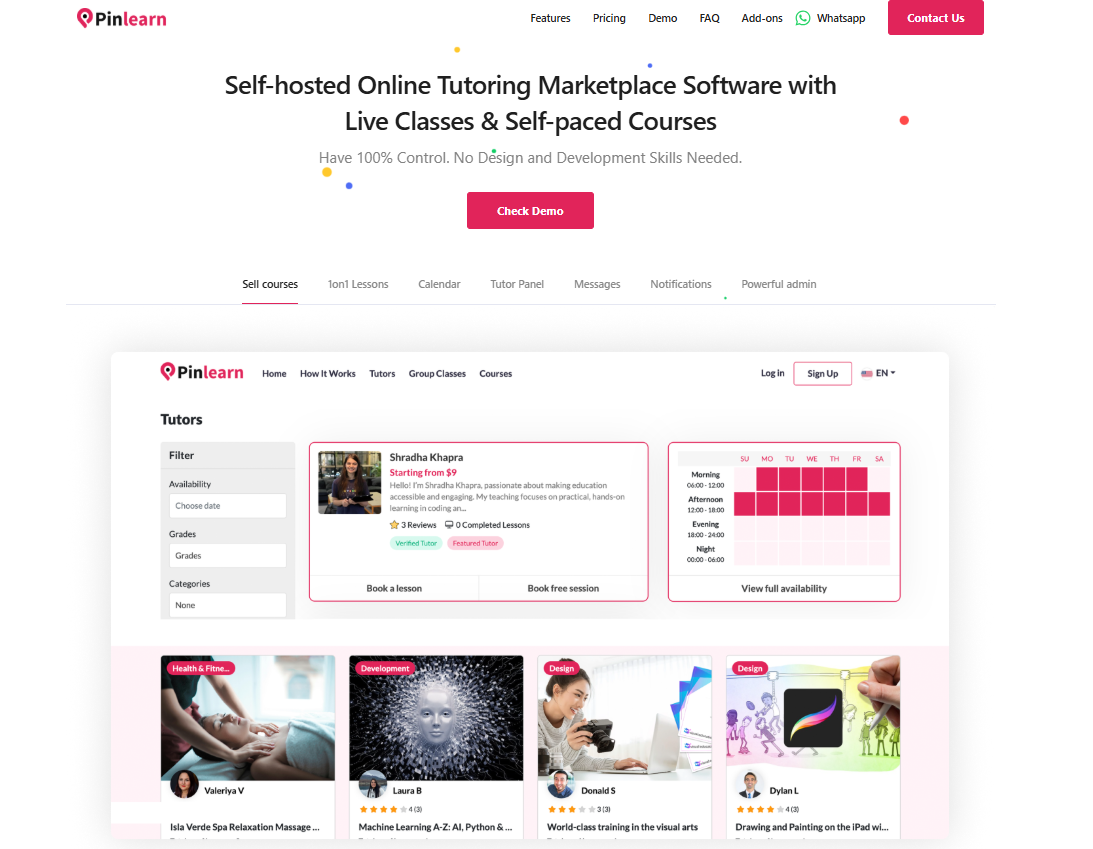
Key Features of Pinlearn:
- 1-on-1 and group live classes
- Interactive whiteboard
- Smart tutor search & advanced filtering options
- Zoom or LessonSpace built-in video integration
- Secure Stripe and PayPal integrations
- Advanced tutor and admin dashboard & reporting
- White-labeling options & branding
- Premium add-on ecosystem and full customization support
- Diverse monetization streams & scalable infrastructure
- Self-paced courses
- Mobile responsive
Conclusion
Building a tutoring marketplace is possible without technical expertise or coding skills. Ready-made clone scripts work particularly well for startups and niche tutoring platforms where initial validation is crucial.
Next Steps:
- Identify a clear and viable niche to scale your tutoring business.
- Plan a quick business roadmap with essential milestones.
- Design a feature-rich and user-friendly interface.
- Choose a ready-made solution for faster time-to-market and affordability.
Remember this development guide. None of the tutoring marketplaces were built at once. Be it Wyzant, Preply, or Varsity Tutors. The key is to establish an MVP and validate it quickly, set feedback loops and make data-driven decisions.
This reduces the guesswork and helps you scale the right way. Ready-made tutoring clone scripts are a significant first step in your journey. Take the giant business leap today!
FAQs-Related to How to Build a Website Like Wyzant
1. How to verify tutors on my platform?
To verify tutors, include identity & qualification verification, subject testing, teaching demo sessions, and criminal and professional background checks.
2. How does Wyzant make money?
Wyzant makes money through commission fees, service fees, premium promotion tools, and feature listings.
3. Who uses Wyzant-like marketplaces?
Wyzant-style marketplaces are used by both learners and tutors. K-12 students, university learners, professionals, and creative enthusiasts are different audience segments.
4. What are the top alternatives to Wyzant?
Preply, Varsity Tutors, and Tutor.com are top alternatives to Wyzant.
5. How long does it take to build a website like Wyzant?
Building a Wyzant-like website from scratch takes around 4 -12 months, depending on feature complexity. Using white-label solutions, you can reduce the launch time to 6-7 days, rather than months.
6. How to handle payment security and disputes on your tutoring marketplace?
Integrate with PCI-DSS compliant payment gateways, use Stripe Connect for revenue splits, escrow logic, clear platform, and refund policies to streamline payments.
7. Can I build a Wyzant-like website without coding?
Yes, you can build a tutoring platform like Wyzant without coding skills using ready-made tutoring marketplace clone scripts like Pinlearn.
8. How can I differentiate my tutoring platform from Wyzant?
Choose a tutoring niche, use AI-powered tutor matching, build a strong tutor community, or advanced learning tools for gaining a competitive edge.